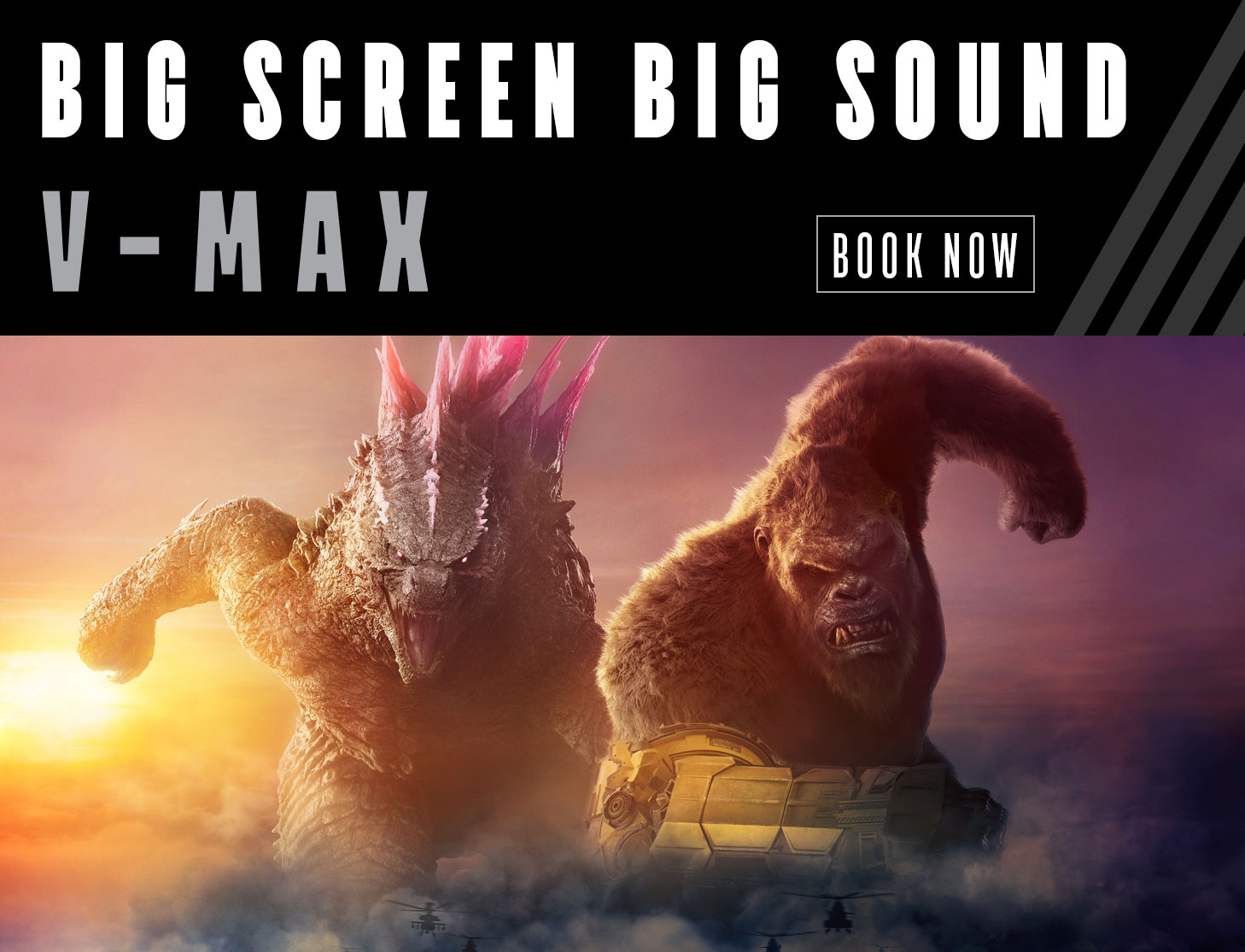
Buy tickets for King Fu Panda Buy tickets for Get Smart Buy tickets for Hancock Buy tickets Now
Buy Tickets Online Movies Cinemas Gold Class Gift Cards Cinebuzz Club
Session Times Help?
Cinebuzz: You are not logged in
email: password: Join Now | Forgotten Password?
about us about AHL history help
A brief history of the Greater Union organisation

1910
Scotsman Thomas James West, formerly a press agent for Barnum & Bailey, establishes West's Pictures.


1912
West merges with two other pioneering companies, Spencer's Pictures and Amalgamated Pictures, to create the General Film Co of Australasia.


1913
The Greater JD Williams Amusement Co, a large exhibition and film supply outfit, joins General, bringing them together as Union Theatres and Australasian Films.


1918
Former travelling vaudevillian and lawyer's clerk, Stuart Doyle, is appointed general manager, and later, joint managing director of Union Theatres/Australasian Films.


1920s
Under Doyle's leadership, Union forms relationship with rapidly expanding Queensland circuit Birch, Carroll & Coyle and kicks off its "Master Picture" production schedule.


1928
Union Theatres renovates and opens The Capitol in Sydney - a great monument to movies. During the first two days, 23,000 people visit the transformed circus arena. Later The Ambassadors opens in Perth and enjoys similar success.


1929
Union builds and opens the magnificent State Theatre in Sydney, above which the company's head office still remains. The building towered above all the surrounding architecture.


1930s
The Depression forces Doyle to liquidate Union and form Greater Union Theatres; distribution arm becomes British Empire Films (BEF); National Theatre Supply Co forms; Cinesound Productions launches. Cinesound produced films about Australia for the next 40 years including the now legendary Ken Hall films, such as On Our Selection and Dad And Dave.


1937
Norman Rydge appointed chairman/managing director, bringing Greater Union, after some earlier losses, a modest profit in 1939 and further growth during World War II. Rydge, a 37-year-old accountant, had been one of Australia's leading tax consultants, the publisher and editor of Rydges Business Journal, held the controlling interest in Menzies Hotel Ltd and was the former Mayor of Canterbury. He stayed with the company until his death in 1980.


1945
UK-based J Arthur Rank Organisation buys 50 % of Greater Union's shares.


1955
Company joins with Hoyts to kick off some of the first drive-in cinemas in Australia and begins refurbishing venues to accommodate stereo and 70mm film and combat television; Greater Union acquires a shareholding interest in the WA chain, the Ace Group.


1960
Sir Norman Rydge and Roc Kirby, founder of the Village circuit, do a handshake deal to form a highly lucrative showbiz partnership that endures to this day. At the time, television was having a devastating affect on cinemas. "Build theatres," said Sir Norman, "We'll be with you - the industry's best years are ahead."


1960s
Company changes name to Greater Union Organisation (GUO) and interest in Village increases to a third; refurbishing program continues.


1965
Rydge retires as Managing Director of GUO and is succeeded by BEF General Manager Keith Moremon - who at the age of 15 joined Greater Union as an office boy.


1971
GUO buys MGM's Australian theatre chain for $4.8 million, taking its circuit to 200 (150 co-owned or operated by partners). The deal also gives access to MGM product, with BEF becoming MGM- BEF Distribution, and signing exhibition deals with Cinema International Corporation and Cinema Center Films augmenting other longstanding deals the company had with other majors, particularly Universal and Walt Disney.


1975
Moremon resigns and is replaced by general manager David Williams, who brings with him an expansion program via multi-screen complexes in each state's capital city; company re-enters film production with Peter Weir's Picnic At Hanging Rock; MGM-BEF becomes Greater Union Organisation Film Distributors.


1982
GUO increases its holdings in film developing outfit Colorfilm from 50% to 100% and purchases Hoyts' interests in 21 drive-ins. The company revamps its image, adopting a new logo and renaming the distribution arm Greater Union Film Distributors and supply company Greater Union Theatre Supplies. More complexes open and plans for a fourplex in the centre of Sydney are unveiled.


1984
Company enters a joint venture with UAA Films for production and distribution of Australian films. Rank Organisation sells its 50% stake in GUO to Amalgamated Holdings Limited, its partner, for $14.7 million.


1985
David Williams retires and deputy managing director and Amalgamated Holdings chairman Alan Rydge takes the helm.


1986
GUO acquires 100% of West Australian cinema chain Ace Group.


1987
GUO takes a 50% stake in Roadshow Distributors and incorporates Greater Union Film Distributors into Roadshow; former Birch Carroll & Coyle general manager, John Smith, appointed GUO chief general manager.


1988
GUO forms joint venture with Village to develop Australian multiplex circuit.


1989
Theatre supply company Greater Union Village Technology (GUVT) formed as a joint venture with Village, after the merger of Greater Union Theatre Supplies with Village Roadshow Technology.


1990
The first multiplexes open at Hurstville, Campbelltown (both NSW) and Innaloo (WA). Paul Oneile joins GUO as managing director to lead the group through major expansion program; Colorfilm Group amalgamated into Atlab, with GUO taking 40% stake in the entity.


1991
GUO ups stake in Queensland-based Birch Carroll & Coyle to 100%. Miranda (NSW) multiplex opens.


1993
GUVT expands overseas with the opening of Singapore and Auckland Divisions. Castle Hill (NSW) multiplex opens.


1994
Robert Manson is appointed chief executive of GUO. GUO increases holding in Atlab to 100%. Multiplexes open at Macquarie (NSW) and Morley (WA) and Innaloo (WA) expands to 11 screens, making it Australia's largest cinema.


1995
GUO announces plans to build a series of 12 to 16 screen MEGAPLEXES in Australia with joint venture partners. Eight additional screens opened at Tuggerah (NSW).


1996
A further 5 screens are added at Innaloo (WA), making it the first MEGAPLEX in Western Australia. Themed retail mall 'Starcade' opens as an addition to the Innaloo cinema complex. Cinema multiplexes open at Glendale (NSW), Liverpool (NSW) and Whitford (WA). New Birch Carroll & Coyle cinema complex opens at Robina (QLD).


1997
Greater Union opens the world's equal largest cinema - the 30-screen Marion MEGAPLEX in Adelaide. Greater Union obtains a 49% interest in Majid Al Futtaim and plans for expansion in the United Arab Emirates.


1998
A 6-screen complex opens at Joondalup (WA), Indooroopilly (QLD) reopens as a MEGAPLEX following expansion and Garden City (QLD) also opens as a new MEGAPLEX under the Birch Carroll & Coyle banner. Birch Carroll & Coyle also open complexes in Darwin (Casuarina - 7 screens) and Rockhampton (6 screens) in December.


1999
1999 March, Birch Carroll & Coyle (QLD) opens a 6-screen cinema in Mackay North and in June, a 5-screen complex in Toowoomba. Arndale (SA) opened with 6 screens in September and Castle Hill (NSW) became NSW's first 16-screen MEGAPLEX the same month. GU Manuka is expanded from 3 to 6 screens. A 6-screen cinema opened in Ajman, United Arab Emirates.


2000
2000 In April GUO expanded its multiplexes at Castle Hill (NSW) and Macquarie (NSW) to 16 sceen MEGAPLEXES. Deira City Centre in the United Arab Emirates opened in July. BCC opened a 16 screen MEGAPLEX at Chermside (QLD) and GUO opened a 12 screen multiplex at Burwood (NSW). David Seargeant is appointed Executive Director of the Greater Union Organisation Pty Limited.


2001
2001 has seen the opening of Marina Mall in Abu Dhabi in the Middle East. In November 2001 the Greater Union Hoys Myer Centre Brisbane was opened as was Earlville Cairns in QLD Hornsby in Sydney. Shellharbour opened December 2001. David Seargeant was appointed Managing Director of the Group.